If you’ve ever worked in education, you’ve likely felt the pressure of balancing countless initiatives, goals, and responsibilities. The education landscape is often a whirlwind of new programs, policies, and expectations. Yet, despite all the activity, many schools struggle to see meaningful, lasting change. The reason? Lack of clear strategy.
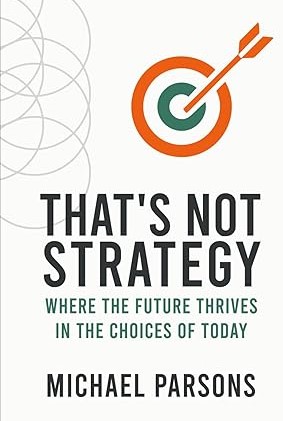
Michael Parsons, an experienced educator and strategist, addresses this issue head-on in his book That’s Not Strategy. According to Parsons, strategy isn’t about being busy—it’s about making deliberate, intentional choices that align with the school’s values and goals. In a world full of distractions, clarity is the missing ingredient that can turn good intentions into impactful, long-term results.
The Problem with Busyness
In today’s education system, schools often mistake activity for progress. Meetings are scheduled, new initiatives are launched, and teachers are constantly on the go. But despite all the busyness, many schools find themselves stuck in a cycle of reactionary planning—responding to external pressures without a clear, cohesive strategy.
The result is a pattern of short-lived efforts with little long-term impact. Programs are rolled out without a clear vision for success, and new initiatives often fizzle out before they can truly make a difference. The truth is, activity without strategy leads to organizational drift, where schools are constantly moving but not necessarily moving forward.
What Strategy Can Do for Your School
Strategy, as defined by Michael Parsons, is not just a plan—it’s a belief about what will help you succeed, grounded in your school’s values and tested by evidence. Strategy is about making intentional decisions that reflect your school’s true purpose, ensuring that every action taken aligns with your long-term goals.
By adopting a strategic mindset, school leaders and educators can:
- Gain clarity about what truly matters for students.
- Focus on fewer, high-priority initiatives that will have the most impact.
- Measure success with clear, actionable metrics.
- Create alignment among all members of the school community, from leadership to teachers to students.
The key to this transformation lies in answering five fundamental questions, as outlined by Parsons in his Bullseye Strategy Model:
- Who are we really here for? – Clarifying the school’s core purpose and the students it serves.
- Where are we now? – Assessing the school’s current situation, strengths, and challenges.
- Why does this work matter? – Defining why the work aligns with the school’s mission and values.
- How will we know if it’s working? – Establishing clear metrics to measure success and adjust when needed.
- What will we commit to doing on purpose? – Determining the deliberate actions the school will take to achieve its goals.
These questions serve as a blueprint for creating a focused, coherent strategy that drives meaningful change. They help schools stop reacting to the latest trends and start making intentional, data-driven decisions that are aligned with the school’s values and vision.
From Theory to Practice: Turning Strategy Into Action
One of the biggest challenges for schools is turning theory into practice. It’s not enough to have a vision; it’s about translating that vision into specific, actionable steps. Once a school has a clear strategic direction, the next step is to create goals that can be measured and tracked.
For example, if a school’s strategy is focused on improving social-emotional learning (SEL), the school should identify measurable outcomes, such as student well-being survey results, peer conflict resolution rates, or teacher assessments of SEL growth. With these metrics in place, the school can track progress, identify areas for improvement, and make adjustments as needed.
Building a Culture of Strategic Clarity
For strategy to succeed, it must be embedded into the fabric of the school culture. Every decision—from curriculum design to professional development to resource allocation—must be aligned with the school’s strategic goals. When everyone in the school, from leadership to teachers to students, understands the vision and the strategic plan, the school becomes a coherent system working toward a common purpose.
Conclusion: Start Building Your Strategy Today
The path to lasting educational change begins with clarity. By moving beyond busyness and embracing a strategic approach, schools can make decisions that have a real impact on students’ lives. The Bullseye Strategy Model, developed by Michael Parsons, provides school leaders with the framework they need to turn vision into action and make choices that lead to measurable, sustainable success.
If you’re tired of spinning your wheels with new initiatives that don’t stick, it’s time to adopt a strategy that focuses on what matters most. Start by asking the five fundamental questions of the Bullseye Strategy Model, and begin building a school culture that thrives on strategic clarity, purpose, and lasting impact.